The Fireplacehouse Journal
Gas or electric fire: choosing for your room and budget
Choosing between a gas and electric fire starts with how you want to use it. A real flame, extra evening warmth and a decorative effect throughout the year are different priorities. Decide which matters most, then compare products that suit your room.
Flame and heat
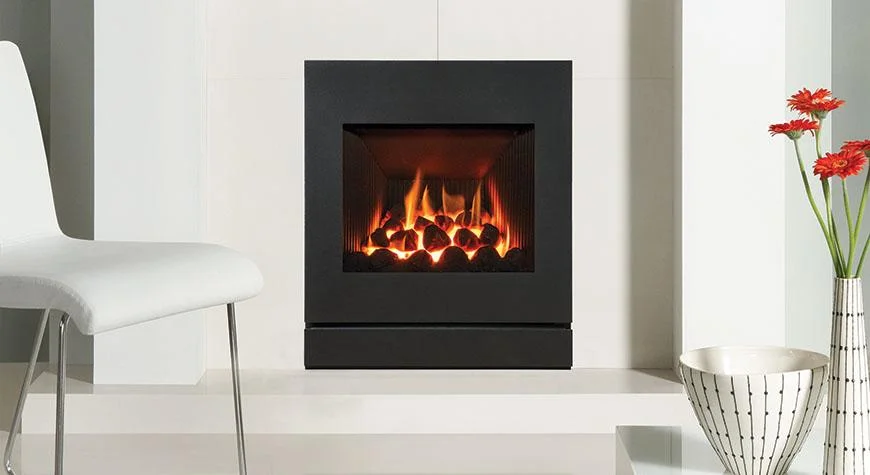
A gas fire offers a real flame with heat whenever it burns. An electric model with independent flame controls lets you enjoy the effect without selecting the heater. That can be useful in a well-heated living room or during warmer months.
For either type, compare the documented heat output with the room’s needs. Do not choose by appearance alone if the fire is expected to provide substantial warmth. Ask for a demonstration of flame settings, controls and operating sound.
What can your room accommodate?
The gas supply and flue arrangement need assessing for a gas appliance. Conventional and balanced-flue models are not interchangeable. Gazco explains that a balanced-flue appliance is sealed from the room and uses an outdoor route for combustion air and exhaust. The permitted configuration depends on the model. Gazco: conventional and balanced flues.
An electric fire needs suitable electrical provision and compliance with its installation instructions. A built-in model still needs careful planning of its recess, clearances and access. “Electric” does not mean that every appliance fits every opening.
Compare equivalent running costs
Use your own tariffs and the product’s documented energy consumption. For electricity, multiply input power by running time and unit rate. For gas, use the rated gas input at the relevant setting, rather than confusing heat output with fuel input.
If you are starting with an output figure, efficiency affects the input required. Compare values on a consistent basis and ask the supplier to clarify unfamiliar specifications. A flame-only electric session is not an equivalent heating comparison with a burning gas fire.
Our electric running-cost guide includes a worked example. Avoid assuming one fuel is always the cheaper choice across every tariff, appliance and usage pattern.
Include purchase and ownership
Compare the appliance, installation, alterations and ongoing care as one budget. If replacing an existing fire, include removal and making good. Ask about servicing requirements, replacement parts and warranty terms for each exact model.
Choose gas if the real flame is a priority and the room supports an appropriate installation. Choose electric if independent flame operation and its particular visual effect better fit your routine.
Next step: compare gas fires and electric fires against the same room requirements and total budget.